
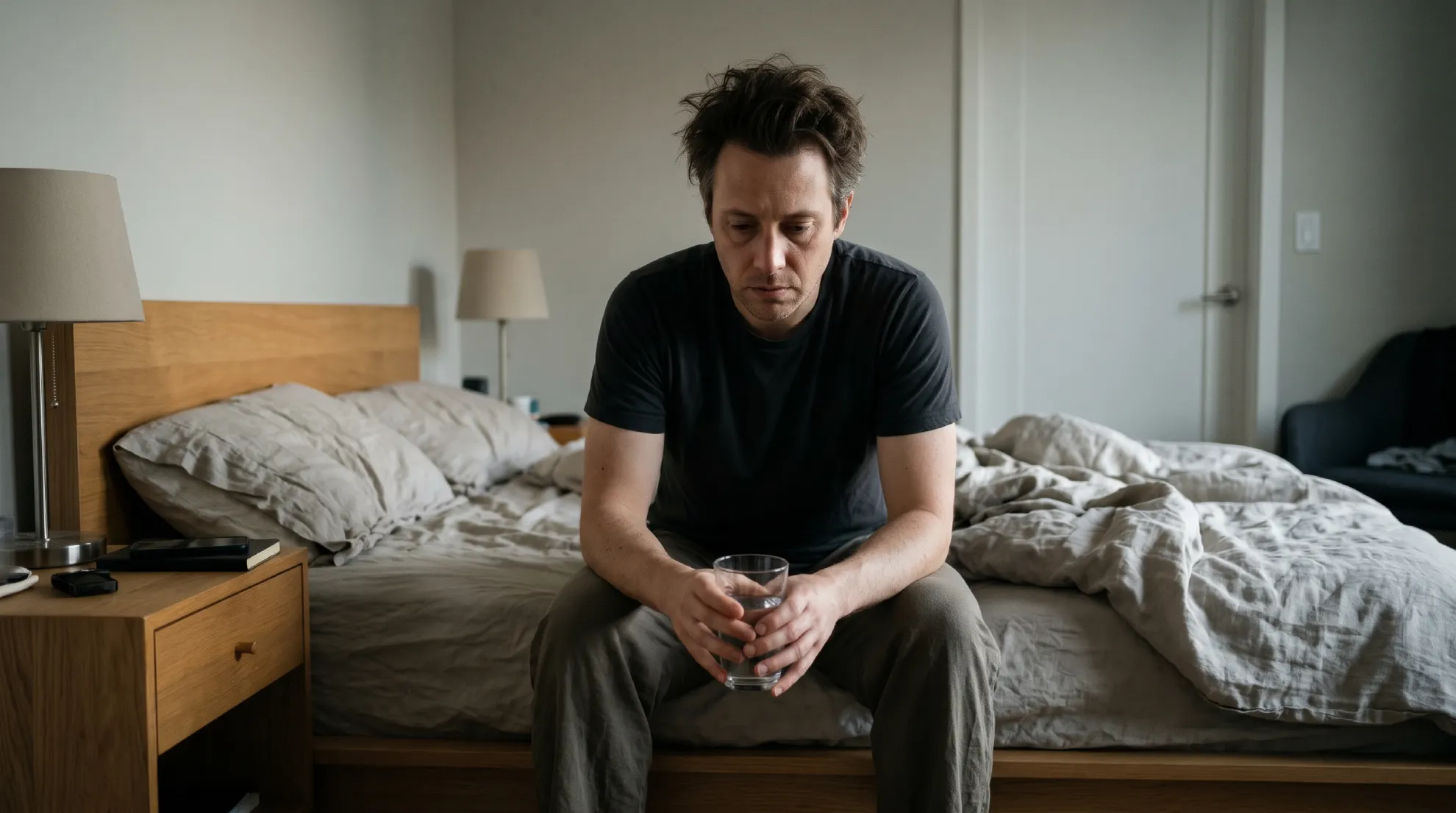
Hangxiety is the anxiety, dread or guilt many people feel the day after drinking. It happens because alcohol calms your brain while you drink, then your brain swings the other way as the alcohol wears off. It usually passes as your body recovers, but if it happens often, it can be a sign that alcohol is affecting your mental health.
Table of Contents
What Is Hangxiety?
Hangxiety is a mix of the words “hangover” and “anxiety”. It describes the anxious feelings that often come with a hangover. Common signs include:
- A sense of dread or that something bad is about to happen
- Racing or looping thoughts
- Worry or guilt about what you said or did while drinking
- Feeling jumpy, restless or on edge
- A racing heart or shaky hands
- Low mood and wanting to hide away
Why Do You Feel Anxious After Drinking?
Alcohol changes the balance of chemical messengers in your brain. It boosts GABA, which calms the brain, and blocks glutamate, which keeps it alert. That is why worries fade and confidence rises while you drink.
Your brain pushes back to stay in balance. When the alcohol wears off, it overshoots the other way. Calming signals drop and alert signals rise, so you feel wired and anxious. Some experts describe a hangover as a small withdrawal from alcohol.
Other things add to the feeling:
- Stress hormones. Alcohol affects the body’s stress system and can raise cortisol, the main stress hormone.
- Poor sleep. Alcohol may help you fall asleep, but it disrupts sleep later in the night. Tiredness makes anxiety worse.
- Physical symptoms. A racing heart, nausea and headache can feel like anxiety, and can make you worry more.
- Memory gaps and regret. Not remembering parts of the night, or remembering things you wish you had not said, feeds guilt and worry.
Who Gets Hangxiety the Worst?
Not everyone gets hangxiety, and some people get it much worse than others. Research points to a few groups:
- Shy people. A study of social drinkers found that alcohol slightly lowered anxiety in very shy people while they drank, but their anxiety rose much more the next day. In this group, worse hangxiety was also linked to signs of problem drinking.
- People prone to anxiety or low mood. A review of 22 studies by researchers at Swinburne University found that people who are prone to anxiety or low mood feel hangxiety more strongly.
- People who drink to cope. The same review found that people who drink to deal with stress also feel it more strongly.
If you live with social anxiety, alcohol can feel like a quick fix for nerves. Hangxiety is often the price you pay the next day.
Feeling
Anxious
After
Drinking?
Alcohol and Anxiety: The Cycle
Alcohol and anxiety can feed each other. You drink to relax or feel less nervous. The next day, anxiety comes back stronger. To get rid of that feeling, you drink again.
Over time, you may start to rely on alcohol to feel calm, and your confidence without a drink can drop. This pattern is often called self-medicating. Heavy drinking is also linked with low mood. Read more about alcohol and depression.
How to Ease Hangxiety
If you are dealing with hangxiety right now, these steps can help:
- Remind yourself it will pass. Much of what you feel is your brain rebalancing after alcohol. It is not a sign that something terrible has happened.
- Drink water and eat something. Dehydration and low energy make you feel worse.
- Slow your breathing. Breathe in for 4 seconds and out slowly for 6 to 8 seconds, for a few minutes. Our guide to regulating your nervous system has more simple techniques.
- Move gently. A short walk outside can help ease tension.
- Do not drink more. A “hair of the dog” drink only delays the anxiety and keeps the cycle going.
- Go easy on yourself. Replaying the night over and over usually makes it worse. If you need to apologise to someone, you can do it when you feel better.
How to Prevent Hangxiety
The surest way to avoid hangxiety is to drink less, or not at all. If you do drink, these steps can help:
- Stick to Australia’s alcohol guidelines: no more than 10 standard drinks a week and no more than 4 on any one day.
- Eat before and while you drink.
- Have a glass of water between alcoholic drinks.
- Plan alcohol-free days each week.
- Notice why you are drinking. If it is to calm nerves or cope with stress, look for other ways to manage those feelings.
Quit
Alcohol
with Our Support!
When Hangxiety Is a Sign of a Bigger Problem
An anxious morning after a big night is common. But it may be time to look more closely if:
- You get hangxiety most times you drink
- You drink to get rid of the anxiety from the day before
- You feel anxious or low most days, not just after drinking
- You often drink more than you planned
- You have tried to cut down but found it hard
At The Cabin Sydney, our outpatient alcohol rehab programme helps you deal with both your drinking and the anxiety behind it. It includes one-to-one counselling, group therapy and family support, and fits around your work and home life. If you need more support, we can arrange inpatient treatment at our residential centre in Chiang Mai, Thailand.
Call us on 1 800 251 994 for a confidential assessment, or contact us online.
Frequently Asked Questions
How long does hangxiety last?
It usually fades as your body recovers from the alcohol, often within a day or so. If anxiety stays with you for days, or you feel anxious even when you have not been drinking, speak to a GP or mental health professional.
Is hangxiety a sign of alcoholism?
Not on its own. Many people get hangxiety after a big night. But research has linked stronger hangxiety with signs of problem drinking in some people. If you get it often, or drink to make it go away, it is worth getting your drinking checked.
Why do I feel guilty after drinking?
Alcohol lowers your inhibitions, so you may say or do things you normally would not. The next day, your brain is in a more anxious state, so small things can feel much bigger. The guilt often eases once the anxiety settles.
Can hangxiety happen after only a few drinks?
Yes. Some people feel anxious the next day even after a small amount of alcohol, especially people who are prone to anxiety. If this happens to you, it may be a sign that alcohol does not suit you.
Sources: Marsh et al., Shyness, alcohol use disorders and ‘hangxiety’, Personality and Individual Differences (2019); Rothman & Aitken, Swinburne University, systematic review of hangxiety; NHMRC Australian alcohol guidelines (2020).
Let our team of professionals demystify the topic
call us directly on
1 800 251 994